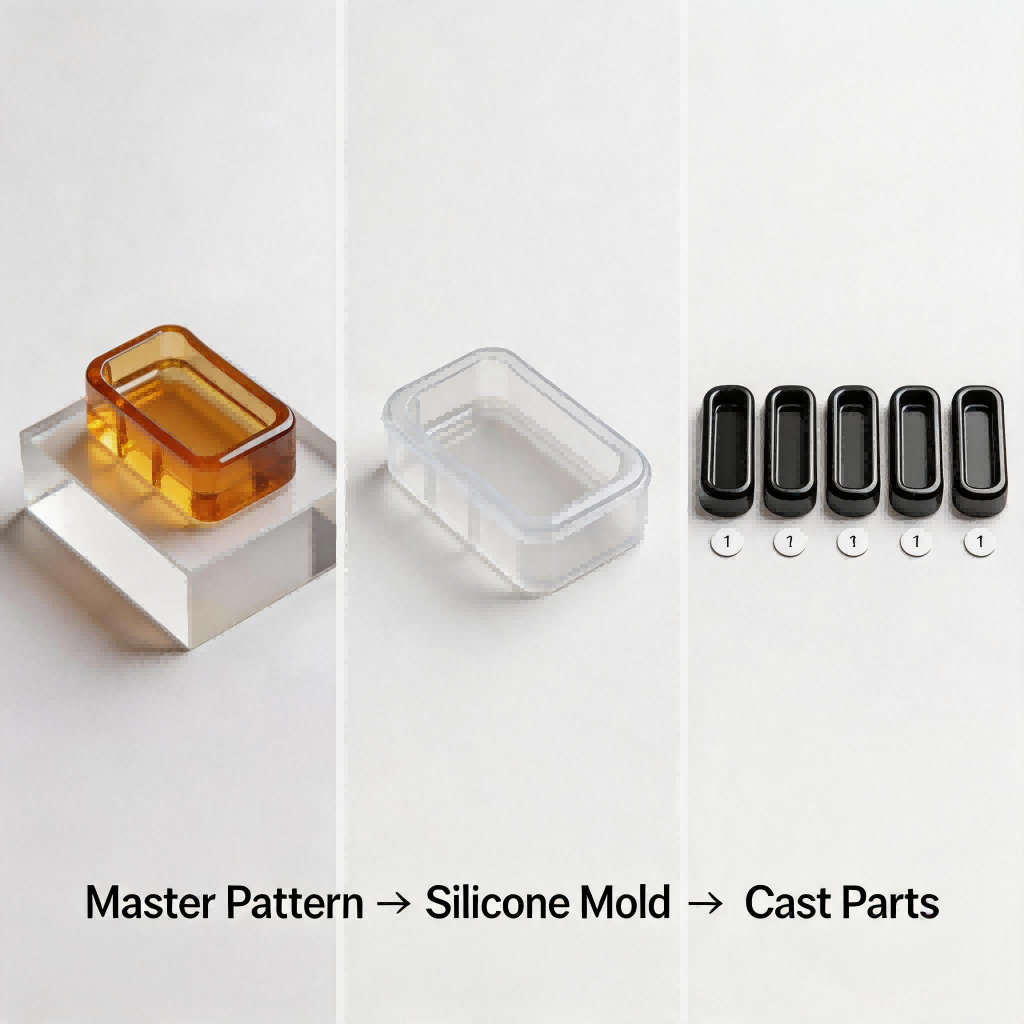
Injection molding is the most efficient way to produce plastic parts at scale. A single steel mold can produce a million identical parts with cycle times measured in seconds. The problem is getting there.
Traditional production tooling costs $10,000 to $50,000 or more, depending on cavity count and complexity. Lead times range from four to eight weeks. That investment makes perfect sense when you need 100,000 parts per year for five years. It makes no sense at all when you need 1,000 parts for a market test, or 5,000 parts for a pilot production run, or when your design is not yet frozen and you know changes are coming.
That gap between prototype and mass production is where rapid tooling lives.
The term "rapid tooling" covers a range of approaches, but the core idea is simple: use faster, cheaper mold materials to produce a limited number of parts, then transition to production steel tooling when the volume justifies it.
The two most common rapid tooling methods are aluminum molds and bridge tooling.
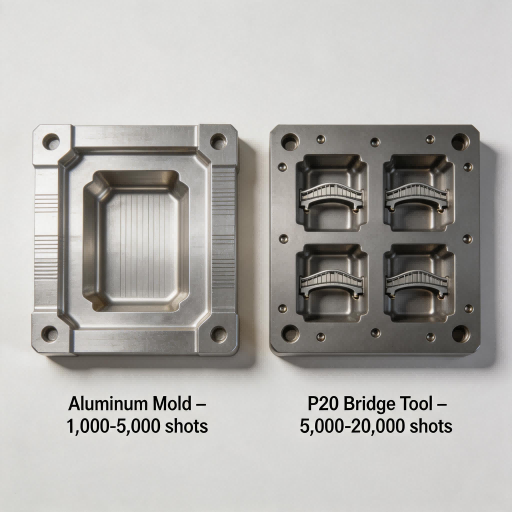
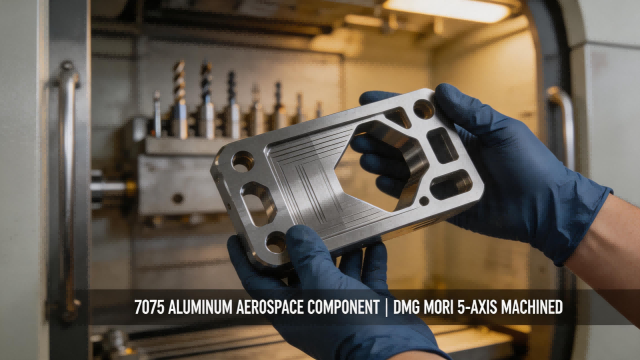
Aluminum molds are machined from 6061 or 7075 aluminum blocks. They produce 1,000 to 5,000 shots, depending on part complexity and material. Lead time is typically 10-15 days. Cost is usually $800 to $3,000. These molds are ideal for product validation, clinical trial quantities, and early market testing.
Bridge tooling uses P20 steel or a steel-aluminum hybrid. It produces 5,000 to 20,000 shots. Lead time is 15-25 days. Cost ranges from $2,500 to $8,000. Bridge tooling is designed for pre-production runs and can sometimes be upgraded to production tooling with modifications.
A US-based medical device company needed 3,000 ABS enclosures for a clinical trial. Their design was 95% finalized, but they anticipated minor changes after the trial. Local US tooling quotes came in at $12,000 for a steel mold with a 6-week lead time, plus $2.50 per part.
We proposed an aluminum mold at $1,800 with a 10-day lead time, plus $0.80 per part. The client saved $10,200 on tooling alone, plus four weeks of lead time. When they did make design changes after the trial, modifying the aluminum mold cost $400. Modifying a steel mold would have cost $3,000.
After the trial, they moved to production steel tooling for their full launch. But the aluminum mold paid for itself in the clinical trial phase.
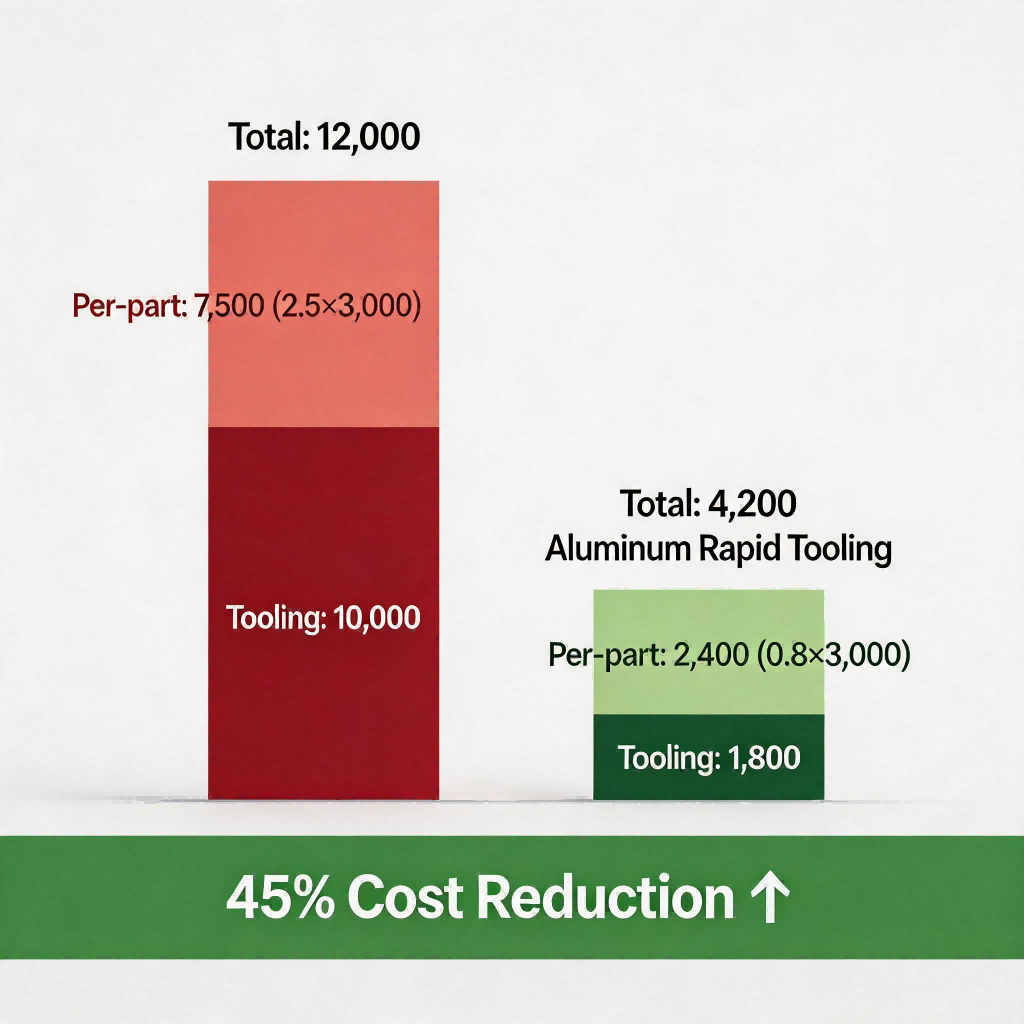
Rapid tooling is not always the answer. Here is a framework we use to help clients decide.
Use rapid tooling when:
Your annual volume is under 10,000 parts
Your design is not yet frozen
You need parts for market testing, clinical trials, or pilot production
You want to validate the part before investing in production steel
You need bridge tooling while production molds are being built
Skip rapid tooling and go straight to production steel when:
Your annual volume exceeds 20,000 parts
Your design is fully validated and unlikely to change
You have the budget and lead time for production tooling
The part requires extremely tight tolerances that aluminum cannot hold
The material you mold is just as important as the mold material. For rapid tooling, we recommend materials that flow well and have consistent shrinkage.
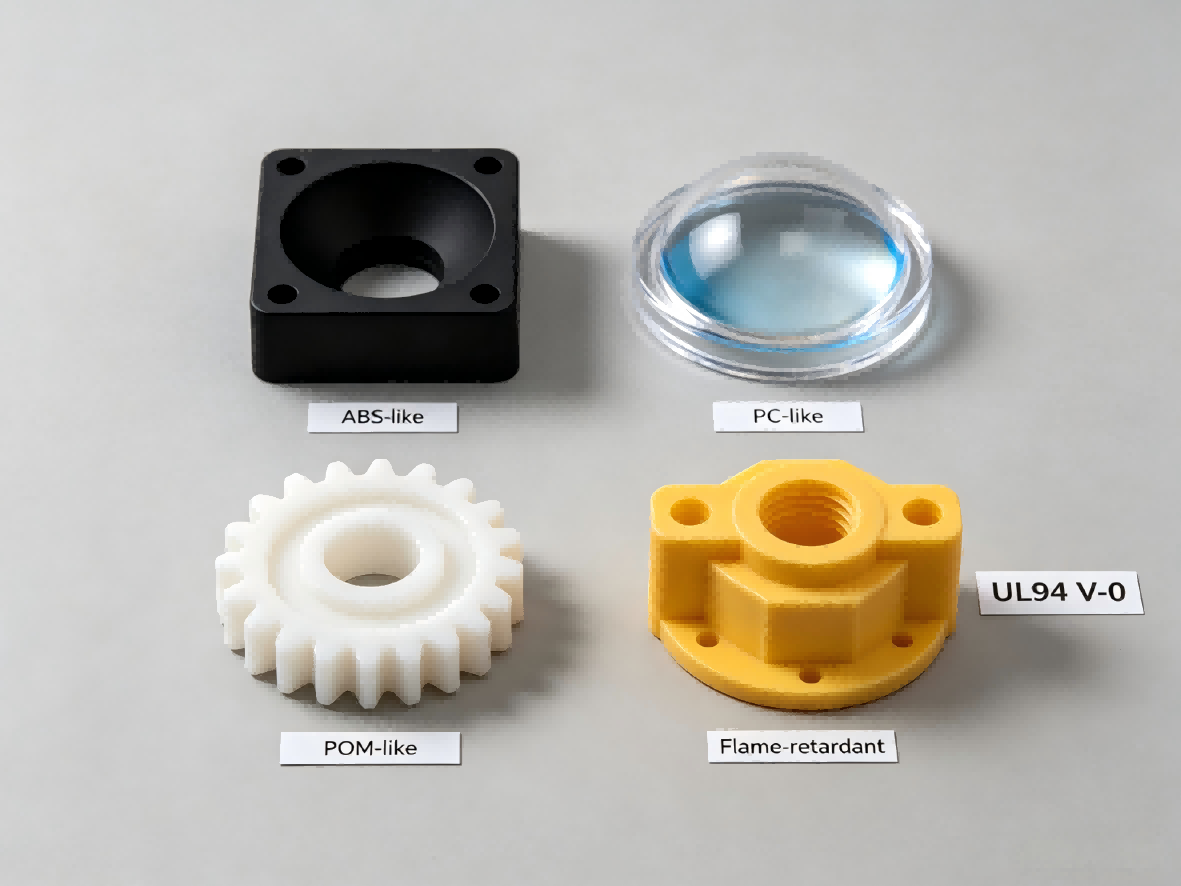
ABS is the most common — it is easy to mold, tough, and accepts paint and adhesive well. PC (polycarbonate) is excellent for transparent parts and impact resistance. PP (polypropylene) is ideal for living hinges and chemical-resistant containers. Nylon (PA6/PA66) offers high strength and wear resistance but requires more careful process control. POM (acetal/Delrin) is perfect for precision gears and bearings.
We have also molded glass-filled materials in aluminum tools, but expect shorter tool life — the glass fibers are abrasive and wear the cavity faster.
Every rapid tooling order includes a DFM report before we start machining. We look for draft angles, wall thickness uniformity, gate location, and ejection system design. If we see issues, we tell you before we cut metal.
Once the tool is finished, we sample it on our injection molding machines and send you sample parts (typically 5-10 pieces) with a dimensional inspection report. You approve the samples before we run full production.
The tool itself belongs to you. We store it for repeat orders, or we can ship it to you or your production molding partner.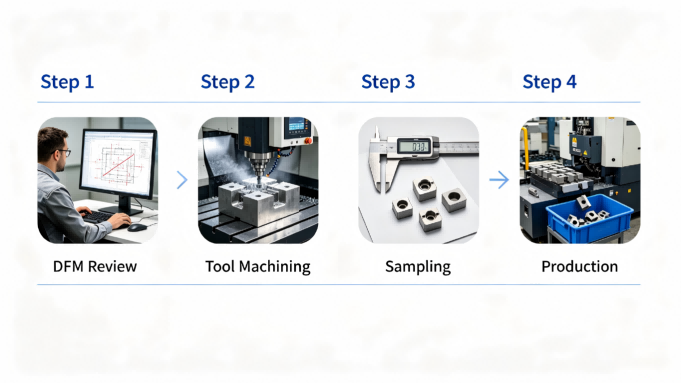
One question we hear often: "Can we use the same design for rapid tooling and production tooling?"
Usually, yes. But there are considerations. Aluminum tools do not require the same level of draft angle as steel tools, so you may be able to use a smaller draft for rapid tooling. Production steel tools can run faster cycle times because of better cooling channel design. And production tools can incorporate hot runners for reduced sprue waste.
We design all our rapid tools with production tooling in mind. When you are ready to scale, we can use your existing CAD files to quote production steel tooling without starting from scratch.
If you have a part that you are considering for injection molding, send us the CAD file and your estimated annual volume. We will tell you which tooling approach makes the most sense — even if it is not ours.
Sometimes the answer is 3D printing. Sometimes it is CNC machining. Sometimes it is aluminum rapid tooling. And sometimes it is production steel from the start. We will give you an honest recommendation based on your volume, timeline, and budget.
CTA: Send your 3D file (STEP format preferred) and annual volume. We will reply within 48 hours with a tooling recommendation and firm quote.
tel : 0755-23596843
WhatsApp : +86-13267211181
E-mail : sales02@gt-proto.com
No.18, Shaqi Community Center Road, Xinqiao Street, Baoan District, Shenzhen, Guangdong Province, China 518104
Links :
test© 2026 Shenzhen GT Prototype Co., Ltd Tutti i diritti riservati.
Mappa del sitopolitica sulla riservatezzaXml